When traveling from another country to receive treatment at our Ophthalmological Specialties Clinic, it is important to be informed about the requirements for bringing medications—both those you bring from your home country and those that may be prescribed after your treatment or surgery. Having the proper documentation is essential to ensure a smooth trip and avoid issues at airports and customs checkpoints.
While regulations vary by country, there can be serious consequences if you violate the laws of your destination. These consequences may include: Confiscation: Authorities may seize your medications.
Legal Sanctions: Including potential jail time or imprisonment.
Before You Travel
Check with the relevant authorities and the embassies of any countries where you have a layover to ensure your medications are permitted.
- Many countries allow a 30-day supply of certain medications but require travelers to carry a prescription or a medical certificate from their healthcare provider. If you will be traveling for more than 30 days, talk to your doctor about how to obtain enough medication, as some insurance plans only cover a one-month supply.
- If your medication is not allowed at your destination, discuss alternatives with your healthcare provider and ask them to write a letter describing your condition and treatment plan.
- You may wish to consult the international guidelines regarding narcotics and controlled substances for travelers, which provide general information for countries where data is available.
- If you are traveling to a different time zone, consult your healthcare provider about any adjustments to your medication schedule. Medications should be taken based on the time elapsed since the last dose, rather than the local time of day.
Find out how to safely store your medications while traveling and check if refrigeration is required. Keep in mind that extreme temperatures can reduce the effectiveness of many medications. - Keep medications in their original, labeled containers. Ensure they are clearly marked with your full name, the healthcare provider’s name, the generic and brand names, and the exact dosage.
- Carry copies of all written prescriptions, including generic names. Leave a duplicate copy at home with a friend or family member in case you lose yours or need an emergency refill.
- Ask your healthcare provider for a formal note if you use controlled substances or injectable medications, such as EpiPens or insulin.
- Prepare a travel kit with items you might need, especially those that may be difficult to find at your destination. Include both your prescription and over-the-counter medications, carrying enough for your entire trip plus extra in case of travel delays. Always pack medications in your carry-on luggage in case your checked bags are lost or delayed.
Below, we provide information regarding the documentation required to bring medications into various countries of origin (where you are traveling from) and transit countries on your way to Colombia.
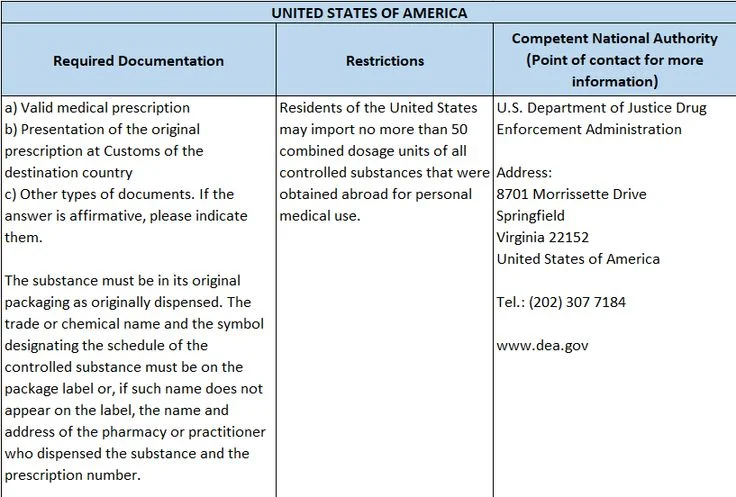
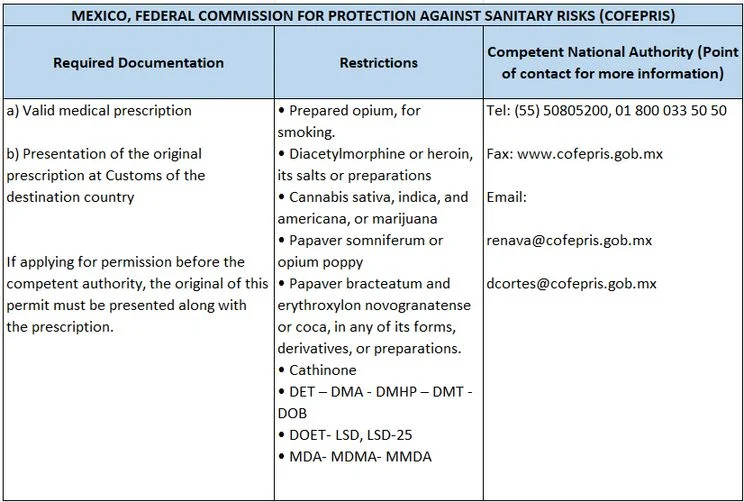
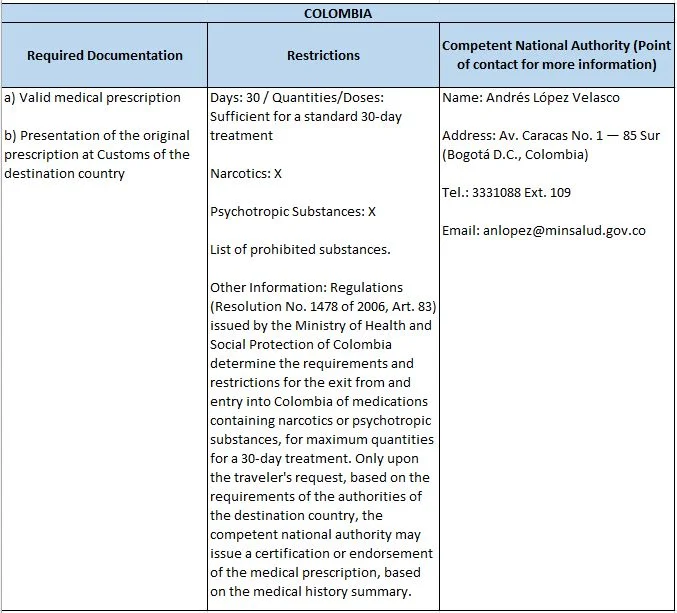
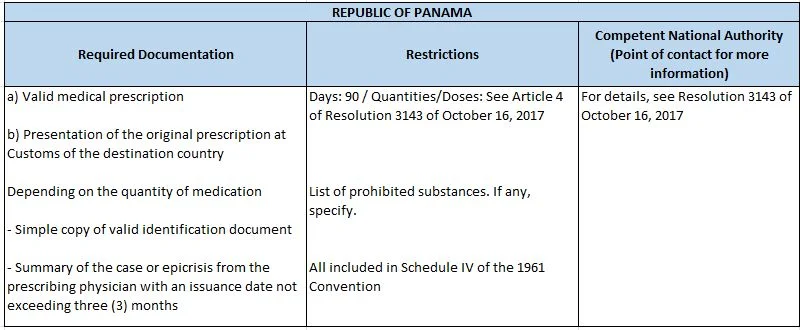
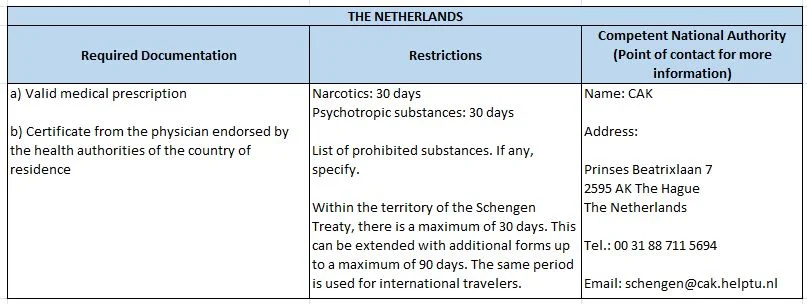
In addition to the countries mentioned above, here are some general recommendations for entering various countries with medication. However, it is essential to verify the specific regulations of each country before you travel to avoid inconveniences and ensure compliance with local laws.
- Always carry a valid prescription.
- Physician's Explanatory Letter: This letter should be on official letterhead and include:
- Doctor and Institution Details: Name, specialty, professional license number, and contact information.
- Patient ID or passport number.3.Diagnosis and the medical necessity of the medication.
- Medication Details: Name (brand and generic), dosage, and the total quantity required.
- A formal request for permission to transport the medication for personal use.
- Doctor’s signature, professional stamp, and contact details. Keep all medications in their original containers with labels clearly visible. Carry a reasonable amount for personal use (generally no more than a 30- day supply).
In some cases, it is helpful to have your medical prescription translated into English or the local language of your destination.
Always check with the relevant authorities or embassies of your destination country before traveling, as regulations are subject to change.